

Rema Premnath (1985)
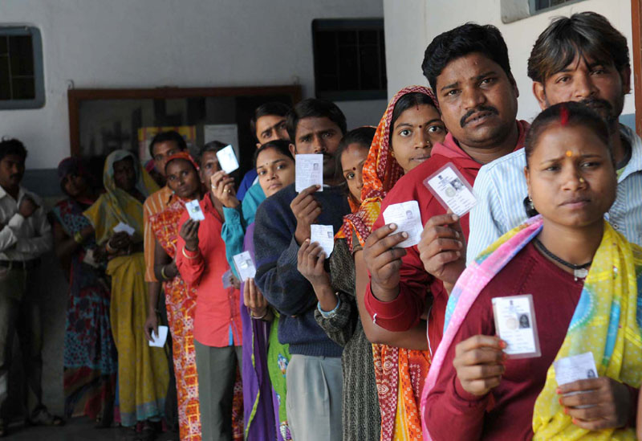
Image from the Internet
It was election time once again. The actual announcement of the dates is becoming less and less significant nowadays because political parties announce their candidates and start their campaigning even months earlier. The months leading to the actual date are very hectic, and, particularly for the assembly election, the whole state goes into a festive mood. Nevertheless, the announcement of dates brings in a new vigour into the ‘festivities’.
But I don’t really ‘enjoy’ elections any more. Of late it has become a nightmare for me in fact. When the dates were announced and the voter list was published I silently wished that somehow my name just disappeared from it so that it will be an excuse not to go to the booth. But that was not to be. The most recent SIR (Special Intensive Revision) of electoral rolls has confirmed that I am very much a citizen of this country and a resident of my constituency and ‘eligible’ to vote. So the all important question started nagging: Whom shall I vote for?
In high-school I was taught how important it is to cast your vote. But nobody taught me how to choose the candidate. Revolutionary freedom fighter and spiritual guru Sri Aurobindo has highlighted the role of ‘educating’ the people for the success of any democracy: “[A] rational education means necessarily three things, first, to teach men how to observe and know rightly the facts on which they have to form a judgment; secondly, to train them to think fruitfully and soundly; thirdly, to fit them to use their knowledge and their thought effectively for their own and the common good. Capacity of observation and knowledge, capacity of intelligence and judgment, capacity of action and high character are required for the citizenship of a rational order of society; a general deficiency in any of these difficult requisites is a sure source of failure. Unfortunately,—even if we suppose that any training made available to the millions can ever be of this rare character,— the actual education given … has not had the least relation to these necessities” (The Human Cycle, p. 198). I am not sure whether such an education would have solved my problem completely, but it would have made a difference for sure.
This dilemma was not something new to me. Before every election I am confronted with the same question. Somehow I brush it aside and present myself at the polling booth. In past elections I have tried every trick in the book, or rather not in the book, to choose the ‘right’ candidate: I have gone with the ‘waves’ which the political analysts predicted pre-election; and also against it sometimes, just for the fun of it. Once I sought advice from a friend and went by it blindly, put my seal (those days!) on the symbol he suggested (which indeed was a good one!). In another state-assembly election I voted for a party with some radical (or even Utopian) ideology launched in North India, though people in the South had hardly heard of it. The next time I supported the party launched by my hero from the film world, not because I believed he could turn his filmy heroics into reality, but it gave me some ‘reason’ to choose. Each time, everyone, whomever I shared my ‘secret’ choice with, said, “you have actually wasted your vote”. The only method I haven’t tried yet is ‘inky-pinky-ponky’ to choose the candidate, which I thought is too stupid, though I am not sure how much better my other methods were. And I have the dubious distinction that not a single candidate whom I had voted for has won any election (assembly or parliament) so far. So wasn’t my vote ‘wasted’ every time? In our system only the number of seats won counts; the percentage of votes hardly gets acknowledged.
But somehow I have managed to cast my vote, exercise my ‘right’ or ‘duty’ as a citizen of a democratic nation. Even during COVID times there came an election. Having taken the vaccine shot just the previous day I was ‘hoping’ for a reaction which will make me stay at home, but that also didn’t help. I woke up the next day fully fit to go and vote.
This time around the dilemma even started to take the form of a kind of guilt in my mind. In the name of exercising my franchise what exactly am I doing? Is my vote worth anything at all in the whole scheme of things?
So I set out to do a bit of homework, started with getting the list of candidates from my constituency. During the previous elections this was not even available, but this time, mercifully, some private websites had uploaded the details of candidates like, age, educational qualification and assets declared (the official government site gave even less information), but none of these could be a deciding factor in choosing one over the other. If some information on their political career too was available, it would have helped perhaps.
But then who cares about the candidate in a multi-party democracy? It is the political parties that matter, isn’t it? Comparing party ideologies turned out to be more Herculean than I ever imagined; couldn’t make sense of all, and somehow all of them sounded more or less the same: vouching for equal rights for all citizens and in the same breath supporting caste/gender/income-based reservations; socialism, secularism, blah, blah, blah. How much sincerity/practicality is there behind all those rhetoric?
So I decided to compare the performance of parties. But from where do I start? The data of last five years will not help because some parties were in the ruling front and others in the opposition, some are national while others regional, so how can one compare their performance? Probably I have to go back more than five years. And some parties contesting now didn’t even exist then!
And then there are alliances to consider, which vary drastically from one election to the next. I chose a party whose ideology somehow I found agreeable, or so I thought, but they haven’t fielded a candidate in my constituency. They have formed an alliance with a regional party which I don’t want to even touch with a ten-foot pole, because they are promoting the interests of one single caste/group, and in the seat allocation among allies my constituency has gone to them. Thus it went on getting more and more complicated.
Then came election promises. To get a feel of that I just had to sit on my balcony and observe the campaign of various parties. For two-three weeks, every day, groups of 20-30 people, predominantly women, representing all ‘major’ parties took turns to walk up and down our street (some of the individuals started looking familiar because they came representing different parties on different days) holding their party flags and party symbols (large models crafted in metal or plastic), with a decked-up jeep in the lead, from which flowed promise after promise into the air. But once again they all sounded the same: how much money will be deposited monthly to the bank account of women, or girl students, unemployed youth or whatever category of the society they thought should be supported by the government, or what kind of freebies are going to be distributed. But didn’t somebody say “Give a man a fish and you feed him for a day; teach a man to fish and you feed him for a lifetime”? So none of these ‘promises’ appealed to me either.
…….
The election day dawned bright and clear. I had not progressed even an inch from where I started in my decision-making process. However, my sense of ‘duty’ dragged me to the polling booth. I really envied all the men and women who were standing in long queues looking so sure of their choice. Am I the only one still undecided? How did all the others make their choice? Have they all done the necessary research or am I the only one thinking too much and still not able to make up my mind? I don’t know what consequence my one vote will have on the future of my constituency. But it will be more negative than positive for sure, because I don’t have an answer if somebody asked the question “why?”
In the evening a childhood friend of mine called and we reminisced how we, as 10-12 year-old kids, used to enact the voting process at home complete with hand-drawn ballot papers, seals carved out from the stem of coconut fronds, and indelible-until-you-wash-with-soap ink mark on our forefingers and all.
She asked, “You remember that you folded the paper the wrong way and ink from the seal, still not dry, got smeared into another row? And what a tantrum you threw when your vote was declared invalid!”
Yes, I remembered all that. But what I couldn’t recall was whether that was deliberate, whether I could not make a choice even then. Still, I wanted my vote to be counted!
Also I remember very well how we all dreamed about the day we will be adults and be eligible to vote. Half a century later I feel it would be a relief if this right/duty is somehow taken away from me. Politics is a subject far beyond my grasp, and I would be happy if the decision-making is entrusted to people who can really understand it.
I didn’t voice these thoughts to my friend but simply said, “Now we have voting machines!”